A 24-hour phone line does not prove that a rehabilitation centre provides overnight medical supervision or emergency treatment. Families need to separate admission access from clinical coverage, identify when a hospital is safer, and obtain written answers about staff, medicines, costs, consent and follow-up before paying or transporting someone.
Key takeaways
- Confirm whether 24/7 access means admissions, nursing, medical care, or emergency response.
- Request an itemised package covering medicines, tests, therapy, accommodation, and discharge planning.
- Ask how withdrawal risks differ for alcohol, opioids, benzodiazepines, and stimulants.
- Get consent, medication, emergency-contact, refund, and discharge terms in writing.
What does 24 by 7 rehab service actually cover?
A 24 by 7 rehab service covers different levels of access, so confirm each one separately rather than trusting the label.
| Service | What it means | What to confirm |
|---|---|---|
| Staffed phone line | Someone answers calls and records enquiries | Who answers at 2 a.m. |
| On-call clinician | A qualified professional gives advice by telephone | Whether the clinician can assess and prescribe |
| Transport coordination | Staff arrange an ambulance or other transport | Which provider responds and how quickly |
| Emergency assessment | Staff check medical and psychiatric stability | Whether assessment occurs before admission |
| Admission desk | Staff process residential intake and documents | Whether a doctor approves admission |
Ask whether a qualified doctor, psychiatrist and nurse are physically present overnight, who can prescribe emergency medicines, and which nearby hospital receives patients. Families comparing 24 by 7 drug rehab services in Pune need these details before paying or transporting someone to a centre.
Do not delay hospital care for an intake interview if there is:
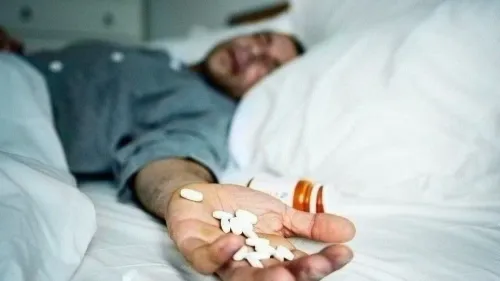
- Suspected overdose or unconsciousness
- Seizures, severe breathing difficulty or chest pain
- Delirium, severe confusion or violent behaviour
- Suicidal intent
Call emergency services or go to a hospital in these situations. Alcohol or benzodiazepine withdrawal can become dangerous, so request a written monitoring schedule, withdrawal-medicine process and hospital-transfer plan. These are essential family details in Pune, not optional extras.
What happens during 24-hour rehab admission in Pune?
A 24 hour rehab admission in Pune should begin with clinical screening, not a promise that a bed is available. Ask who answers the phone, whether that person is trained to screen withdrawal and medical risk, and whether a doctor approves admission.
1. During the telephone screen, provide the substance, amount, frequency, last use, previous withdrawal, seizures, overdose history, prescribed medicines, allergies, medical conditions, pregnancy, psychiatric symptoms, suicidal thoughts and psychosis. Keep identification documents ready.
2. Ask when an in-person assessment will occur and who conducts it. Confirm that a doctor reviews the case before admission, rather than treating a counselling appointment or bed booking as medically supervised care.
3. If the person is intoxicated, unconscious, having seizures, severely confused, struggling to breathe, violent or suicidal, ask for emergency hospital care instead of direct residential admission. A medically unstable person needs immediate assessment and transfer capacity.
4. During the first 24 hours, confirm baseline vital signs, withdrawal-risk assessment, medication reconciliation, psychiatric review and laboratory tests when indicated. Ask how often nurses check the patient and who can prescribe withdrawal medicines.
5. Confirm meals, sleep arrangements, consent, privacy and family communication, including who may receive updates. Ask for the withdrawal-monitoring and hospital-transfer plan, especially for alcohol or benzodiazepine use.
Request a written timeline covering the call, assessment, admission decision, first-day checks and follow-up. These drug treatment details in Pune distinguish continuous clinical care from a staffed phone line plus accommodation; “immediate placement” alone proves little.
Which services and costs are included in the written package?
A package is comparable only when it names each service and its price. Drug rehab services inclusions in Pune should state whether the daily or fixed fee covers:
- Assessment and diagnosis
- Detoxification and withdrawal monitoring
- Doctor reviews, nursing coverage and psychiatric assessment
- Individual counselling, group therapy and family sessions
- Meals, accommodation and medication administration
- Laboratory tests and other investigations
- Discharge planning and follow-up care
| Cost item | Included only if written | Confirm as separate charge |
|---|---|---|
| Transport and tests | Ambulance transport, laboratory tests and investigations | Ask whether each trip and test is billed separately |
| Medicines and complications | Prescribed medicines, psychiatric medicines and hospital treatment | Confirm drug costs and hospital-transfer responsibility |
| Stay and room | Promised length of stay and selected accommodation | Check extension rate and room-change charges |
| Daily needs | Meals and routine care | Check smoking products, personal items and attendant charges |
| Aftercare | Discharge planning and follow-up appointments | Confirm the post-discharge appointment cost |
Ask for the admission fee, daily or package rate, deposit, cancellation terms and refund policy in writing. Also request family-visit or travel costs where applicable. “All-inclusive” has no practical value if exclusions remain unnamed; an ambulance or psychiatric medicine can change the final bill substantially.
Compare two packages by assessment quality, overnight monitoring, medication management, therapy frequency, family work and aftercare—not by room type or advertised price alone.
How should the centre manage different substances and medical risks?
A 24-hour phone line is not continuous medical cover. Before admission, confirm who is physically present overnight, who can prescribe, how often nurses record vital signs, which withdrawal-scoring tool they use, and which nearby hospital receives emergencies.
1. Verify the treating doctor’s medical registration, the clinical psychologist’s Rehabilitation Council of India registration and each nurse’s nursing-council credentials. Ask whether a doctor or psychiatrist is on site overnight, on call, or reachable only by phone.
2. Ask to see the written withdrawal protocol and emergency pathway. Confirm access to oxygen, suction, a first-aid kit, emergency medicines, seizure management and ambulance transfer, then ask who authorises hospital admission.
3. Ask how the plan changes for alcohol, benzodiazepines, opioids, stimulants, cannabis and mixed use. Alcohol and benzodiazepine withdrawal require close observation for seizures, delirium and severe autonomic symptoms. For opioid use, ask whether buprenorphine, methadone or extended-release naltrexone is available when a doctor considers it suitable, and how treatment continues after detox.
4. Ask how staff assess depression, bipolar disorder, psychosis, trauma, hepatitis, HIV and tobacco dependence. Drug treatment details in Pune should include the named assessor, diagnosis, treatment goal and review schedule.
5. Confirm who stores and administers medicines, who may prescribe them, and how stock is recorded. Ask whether urine testing requires consent, how results are protected, and what information the centre may share with family; paying for an adult’s care does not provide unrestricted access to clinical records.
Which documents and questions protect the family after admission?
Before paying, ask for a dated admission agreement and a copy of the patient’s care plan. It should name:
- The diagnosis, treatment goal, named treating professionals and expected review dates.
- The medication plan, consent forms, discharge-against-advice rules, visitor and phone rules, personal-property policy, and restraint or seclusion policy.
- The process if the patient asks to leave, the emergency-transfer procedure, and the receiving hospital’s name, address and telephone number.
| Claim to check | Written proof to request | What failure reveals |
|---|---|---|
| 24-hour care | Overnight doctor, psychiatrist, nurse and withdrawal-monitoring roster | A phone line may be presented as medical coverage |
| Emergency readiness | Prescriber’s name, equipment list and hospital-transfer protocol | The centre may not manage seizures, delirium or overdose |
| Family communication | Patient’s consent, nominated representative and permitted information | Payment does not guarantee access to clinical records |
If your family questions drug rehab in Pune, ask the patient what information may be shared, how consent is recorded and who is the nominated representative. Adult confidentiality limits relatives’ access, even when they pay the bill.
The discharge plan must name follow-up appointments, medication supply, warning signs, emergency contacts, relapse response and continuing-care options. It should also state continuing-care choices rather than promise a fixed seven-, 28- or 90-day cure.
Use this checklist when evaluating Aatma De-Addiction & Rehabilitation Center or another Pune provider. Guaranteed permanent cure, secret medicines, forced isolation as the main treatment and claims that relapse shows moral failure are reasons to stop.
Frequently asked questions
What does a 24/7 drug rehab service in Pune actually cover?
Confirm whether 24/7 means phone support, admissions, on-site staff, nursing observation, doctor availability, or emergency transfer. These are separate services.
What happens during 24-hour rehab admission in Pune?
Admission should include identity and medical-history checks, substance-use assessment, risk screening, consent, medication review, belongings procedures, and an initial treatment plan.
Which drug rehab service costs and inclusions should families confirm?
Ask for a written, itemised package covering accommodation, meals, medicines, laboratory tests, consultations, counselling, family sessions, transport, length of stay, and discharge care.
How should a centre manage different substances and medical risks?
Ask how the centre assesses withdrawal from alcohol, opioids, benzodiazepines, and stimulants, including vital-sign monitoring, escalation criteria, emergency transfer, and doctor supervision.
Which questions and documents protect families after admission?
Request the admission form, consent terms, medication chart, emergency contacts, payment receipts, refund policy, visiting rules, progress updates, discharge summary, and relapse-prevention plan.